
Description
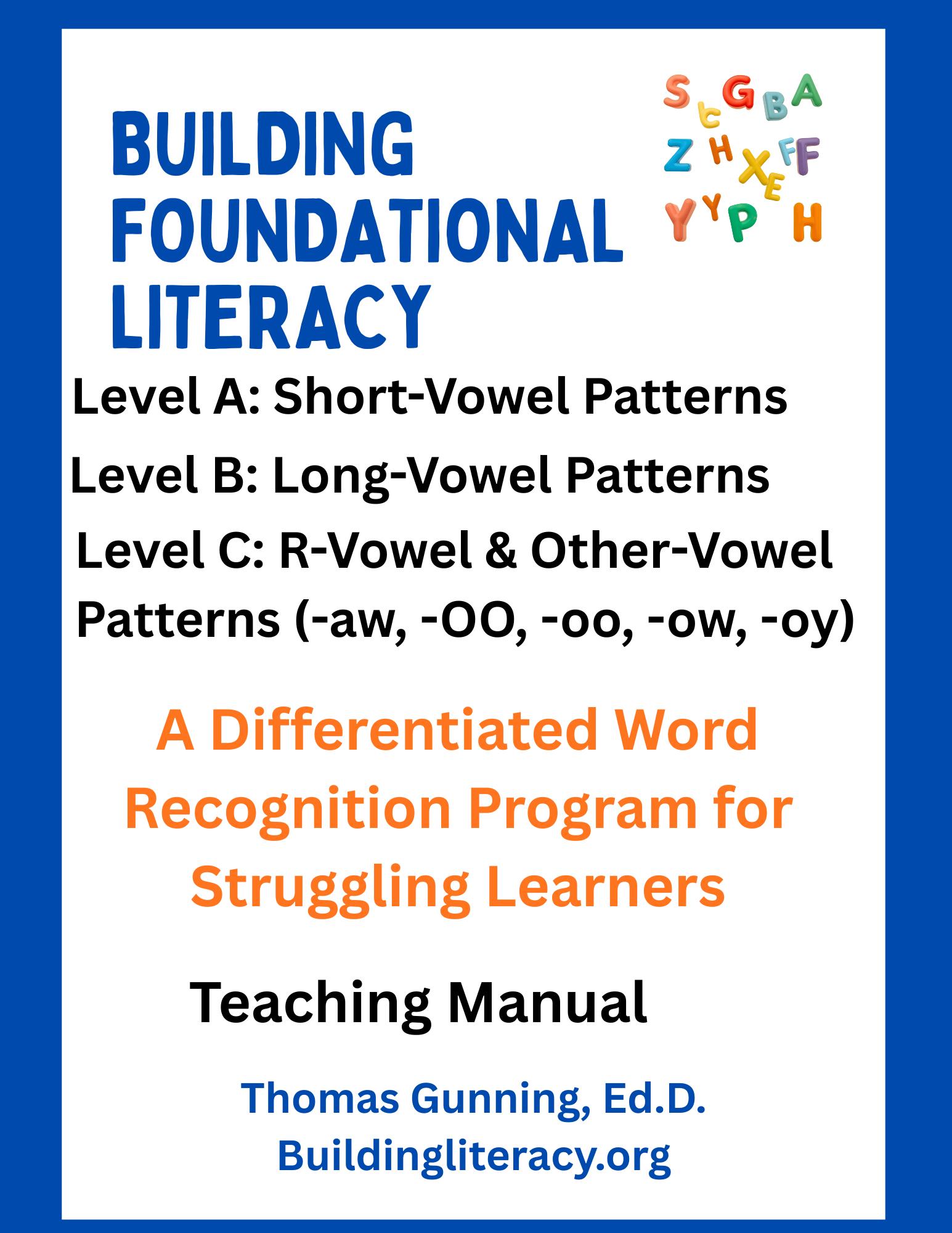
Building Foundational Literacy:Teaching Manual for Levels A, B, &C
Features
- A step-by-step teaching approach that builds on what students know
- Use of specialized techniques to help struggling readers cope with skills that pose special problems. These feature using phonics to learn high-frequency irregular words, such as was and been; focusing on the second sound to learn blends—adding l to back to form black; using split digraphs to foster the learning of the final-e pattern—inserting n in pie to form pine.
- Placement at the appropriate level using the Phonics Inventory
- Continuous monitoring of progress
- Unit and end-of-book Checkup Tests
- High payoff practice activities include sorting, assembling letters into words, rearranging scrambled sentences, making words by adding and substituting letters, and composing secret messages by manipulating letters in words.
- Application activities feature reading rhymes, songs, and riddles, and composing brief texts using spelling words based on the skill being explored. Each lesson is accompanied by one or more decodable selections specifically written to reinforce skills being taught. For instance, after learning –ee patterns, students read about cheetahs and chickadees. Most selections are informational so students build background knowledge while developing foundational phonics skills. Rhymes and songs are provided in a separate publication, Rhymes and Songs for Building Foundational Skills, which is available in the Store. Decodable reading selections are located in three publications, Building Foundational Literacy: Reading Selections Level A, Level B, and Level C, which are also available in the Store..
- For students who struggle despite the intensity of the program and the extensive practice activities, a Tracing Approach and Speech-to-Print Practice are available. The Tracing Approach combines techniques recommended by Orton-Gillingham and by the Fernald VAKT approach. Because students are only required to recognize the printed form of a word spoken by the teacher, Speech-to-Print Practice is about as easy an approach to phonics instruction as you can find, but is highly effective. Each lesson is accompanied by a Tracing Approach and Speech-to-Print Practice activity, which are available for use if needed.
Differentiation is emphasized. In a traditional literacy group, everyone in the group receives the same amount of practice, even those who are slow to catch on. In Building Foundational Literacy, you are urged to provide each student with as much practice as they need. In addition to differentiation in the amount of practice materials, differentiation is also provided in terms of intensity of instruction and instructional approach. Lessons are set up in such a way that the intensity of the lesson can be increased if students are not catching onto the skill being taught.
Reviews
There are no reviews yet.