
Note to the Teacher
This is the first post in a blog entitled “Morpheme Mondays.” In the blog I will provide discussions of morphemes and supply related activities. I will attempt to make the discussions relevant and engaging. The blog is designed for grades 3-4 and up but would be appropriate for any students in the upper grades who are not familiar with the morphemes being introduced. The blog will be posted a day or more before Monday. The rest of this post is designed for students. The student segment is designed so that students can read and respond to it on their own. However, students will get more out of the post if you discuss it and provide follow-up. Please feel free to adapt and expand the student segment. Feedback and suggestions would be appreciated.
Morpheme Monday 1
Welcome to Morpheme Monday. Although morpheme might be a new word for you, you’ve been writing and reading morphemes for years. A morpheme is a word part that has meaning. The word help is a morpheme. We can add to or change the meaning of help by adding other morphemes. Word endings and beginnings such as –s, -ed, –ing, –ful, –less, and –un are morphemes. They have meaning. We can add those to help: helps, helped, helping, helpful, helpless, unhelpful. Help is the main morpheme. We call the main morpheme the “base,” but notice how the other morphemes add to the meaning of the base.
You might be asking, “Why should I learn about morphemes?” Knowing morphemes can help you figure out the meanings of unknown words and build your vocabulary. For instance, you might not know the meaning of chronological in the sentence, “Put the dates in chronological order.” But if you know that the morpheme chrono means “time,” that can help you figure out that chronological order means “in time order.” The same goes for the word chronic. A chronic complainer would be someone who complains all the time or at least a lot of the time.
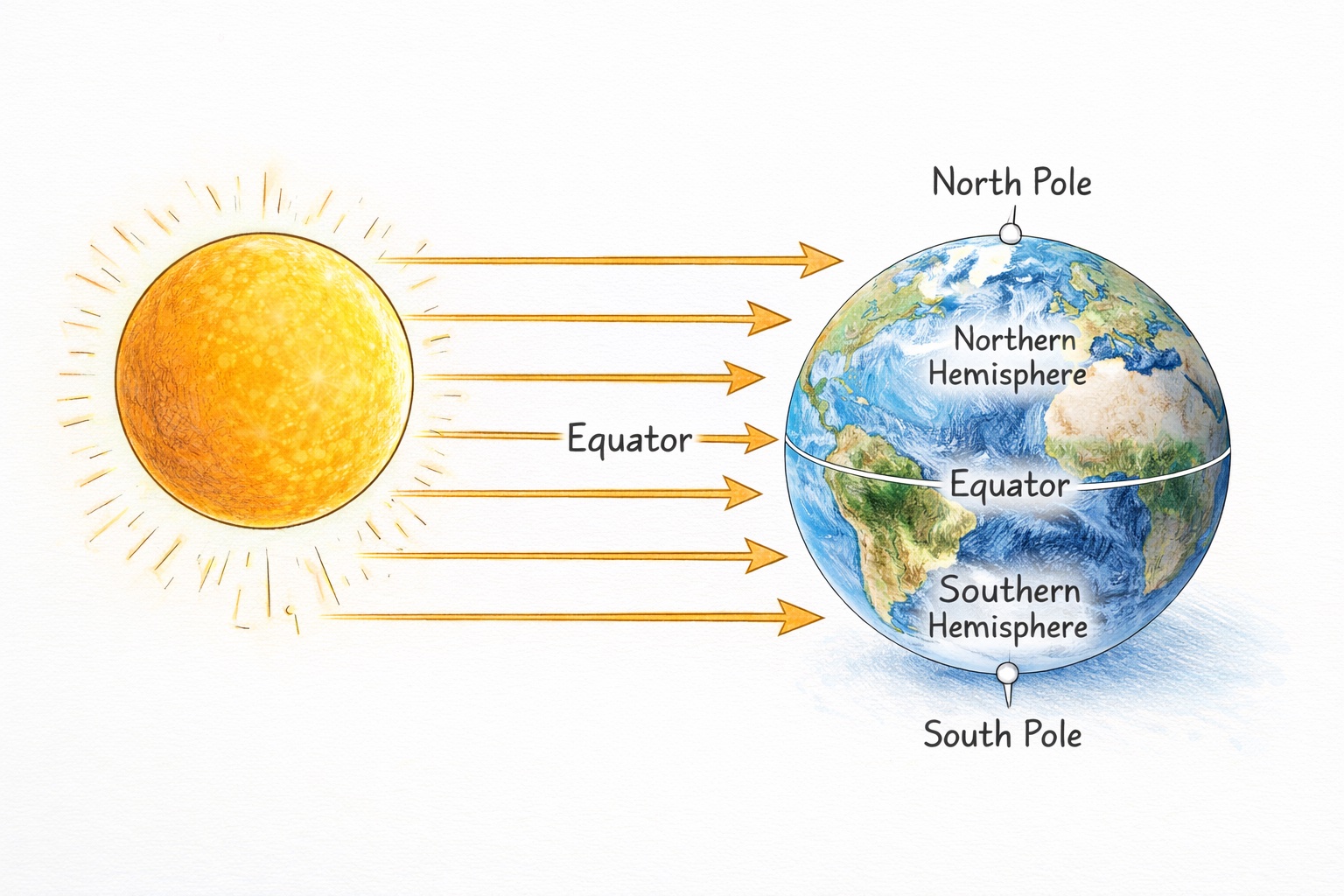
This Monday we are going to look at the morphemes equi and nox because we are going to talk about the spring equinox. The morpheme equi (equa) means “equal.” The equator divides equal parts of the Earth. It divides Earth into a Northern Hemisphere and a Southern Hemisphere. The equator is equidistant from the North Pole and South Pole. It’s the same or equal distance from the equator to the South Pole as it from the equator to the North Pole. Equalize means to “make equal.” To equalize the contest, the younger kids were given more time. Nox (noct) means “night.” Equinox means “equal night.” The equinox is when the amount of day and night are equal. Noct is a form of nox. A nocturnal animal is one that is active at night.
Why Spring Starts on March 20
Spring starts on the morning of Friday, March 20, at 46 minutes after 10 o’clock if you live in the eastern part of the United States. The start of spring is set by what is known as the spring equinox. Equi is a morpheme that means “equal.” The morpheme nox means “night.” On the first day of spring there is an equal amount of day and night. The change of the season is caused by a change in the tilt of the Earth as it moves around the sun. In winter, the Northern Hemisphere, which is where we live, slants away from the sun. The sun is low in the sky and so the Northern Hemisphere receives less sunlight. In spring, the Northern Hemisphere begins to slant toward the sun. The sun is high in the sky and so the Northern Hemisphere receives more sunlight.
That slant toward the sun begins on March 20. On March 20, the sun appears to cross the equator and appears to head north. The equator is an imaginary line that divides the Northern Hemisphere from the Southern Hemisphere. If you were standing at the equator, the sun would be just about directly overhead. Spring would have arrived for the Northern Hemisphere.