
To Teachers
This blog is designed for grades 3-4 and up but would be appropriate for any students in the upper grades who are not familiar with the morpheme(s) being introduced. The main purpose of the blog is to develop students’ knowledge of bases (roots), prefixes, and suffixes so they can use these elements to derive the meanings of unfamiliar words and build their vocabularies. As part of presenting a new morpheme each week, words containing that morpheme are also introduced. Chances are some of those words will be unfamiliar, thus providing an opportunity for added vocabulary development. This week’s Morpheme Monday Lesson introduces Latin and Greek morphemes for numbers and sizes: deci-, dec(a)-, centi, milli-, kilo-, multi-, poly-, mega- mini-, micro-, hemi-, semi-.
To Students
Number and Size Morphemes
This year the United States is celebrating its semiquincentennial. Semiquincentennial is a long, complicated word. Most words are made up of one or two morphemes, but semiquincentennial is a polymorphemic word. It is formed with five morphemes. Although it looks hard, you can easily figure out its meaning by using what you know about morphemes. The first step is to do a word sum. A word sum is a bit like a math problem. First divide semiquincentennial into its morphemes. Then combine the meanings of each of the morphemes to get the whole word’s meaning. Use the Number and Size Morpheme Chart below to help you figure out the meaning of each of the morphemes. The morpheme enn, which is not listed, means “year.” The morpheme –ial, which is not listed, is a suffix that can change a noun into an adjective.
Number and Size Morpheme Chart
| Morpheme | Meaning | Example |
| deci-
dec(a)- |
ten, one tenth of
ten |
decimeter
decade (10 years) |
| centi- | one hundred, one hundredth | century, centimeter |
| milli-, kilo- | one thousand, one thousandth | millipede (thousand feet) millimeter (one thousandth of a meter)
kilometer (thousand meters) |
| multi-, poly- | many | multimillionaire, polysyllabic |
| mega- | great, very large | megastar |
| mini- | smaller than others | minibus |
| micro- | very small, one millionth | microscope |
| hemi-, semi- | half | hemisphere, semicircle |
semi + quin + cent +enn + ial
semi (half) + quin (five)+ cent (100) +enn (year) + ial
Semi means “half.” Quin means “five.” Cent means “one hundred.” Enn means “year.” The suffix –ial makes words into nouns or adjectives. When combined, these morphemes mean half of 500 years, which is 250 years. That’s how long it’s been since the Declaration of Independence was signed and the colonies declared their independence from Great Britian. Thus, the United States is having its Semiquincentennial Celebration.
Using the Number and Size Morpheme Chart, circle the correct answers.
1. How many years are in a decade?
a. 10 b. 50 c. 100
2. If there are 10 people in a circle, how many are in its semicircle?
a. 5 b. 10 c. 15
3. How old is a centenarian?
a.10 b. 50 c. 100
4. How many years ago was America’s bicentennial held?
a. 50 b. 100 c. 200
5. How far is a kilometer?
a. 50 meters b. 100 meters c. 1,000 meters
6. How many wheels does a quintocycle have?
a. 3 b. 5 c. 7
7. How long is a millimeter?
a. one tenth of a meter b. one hundredth of a meter c. one thousandth of a meter
8. Which of the following buses is the smallest?
a. regular bus b. microbus c. megabus
9. How many hemispheres does Earth have?
a.1 b. 2 c. 3
10. Which of the following is a polysyllabic word?
a. think b. thought c. thoughtful
How the Northern and Southern Halves of the World Differ
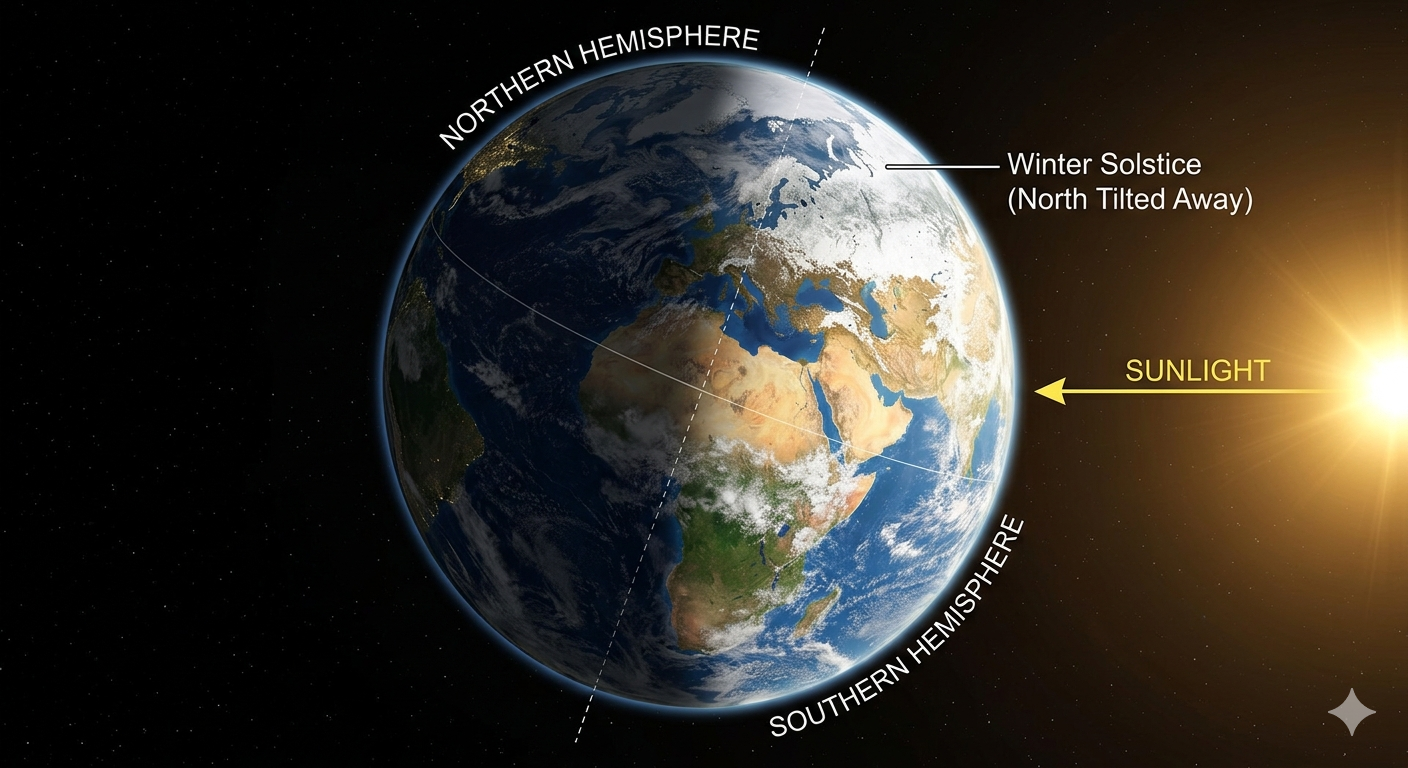
Use the number and size words from the chart above to help you read and find out how life in the northern half of the world differs from life in the southern half of the world. Then answer the questions that follow.
 -Gemini Generated Image
In December, kids in New York might be wearing multilayers of warm clothing and going ice skating. It might be 10 degrees below zero centigrade (14 degrees Fahrenheit). Meanwhile, Kids in Australia, which is about 16,000 kilometers away (almost 10,000 miles), might be wearing multicolored shorts and riding minibikes. It might be 30 degrees centigrade (86 degrees Fahrenheit). Why is there a mega difference between temperatures in Australia and New York. The Earth is shaped like a ball. An imaginary line called the Equator goes around the middle of the Earth and splits it into two halves called “hemispheres.” Hemi means “half” and sphere means “ball.” The Northern Hemisphere is the top half of the Earth. The Southern Hemisphere is the bottom half of the Earth. The Earth is a little bit tilted as it moves around the Sun. Here is what happens because of this tilt: In December, the Northern Hemisphere is tilted away from the Sun, so it gets less sunlight. That makes it winter here. At the same time, the Southern Hemisphere is tilted toward the Sun, so it gets more sunlight. That makes it summer there.
1. Which hemisphere is New York in?
a. Northern b. Southern
2. Which of the following is a summer month in Australia?
a. January b. June c. August
3. In which of the following months would the Earth be tilted toward the Sun in New York?
a. January b. February c. July
4. Which is longer?
a. meter b. kilometer c. mile
Millipedes and Centipedes
Read to find out how millipedes and centipedes got their names. Then underline the answers to the questions that follow.
Millipedes ought to be glad they don’t wear shoes. They can have more than 300 legs. And one group of millipedes has 1300 legs. That’s why they are called “millipedes.” Milli means “thousand” and peds means “feet.” Millipedes look like worms. Their bodies are divided into parts known as “segments.” Each segment has two pair of legs. When millipedes hatch, they have just three pairs of legs. As they grow older, they add more segments to their bodies, and so they add more legs. The largest millipedes are more than 33 centimeters long, which is more than a foot. Millipeds are long livers. Most live from 5 to 10 years, but some live more than a decade.
Millipedes eat dead plants. They help keep the ground clean. But sometimes the eat the roots or stems of young plants. If attacked, millipeds known as “pill millipeds” curl up into a ball. They then make a bad-smelling liquid. Some millipedes can squirt this liquid. Millipedes should not be handled. They liquid they squirt can be painful and is harmful to the eyes. People who have handled millipedes should wash their hands with soap.
Centipedes are in the same family as millipedes. Like millipedes, centipedes have a lot of legs. Centi means one hundred. Centipedes can have more than 100 legs, but some centipedes have just 30 legs. Centipedes mostly eat insects. But some of the larger centipedes eat birds and frogs. Centipedes bite and are poisonous. Mostly they bite insects, but they will also bite people. Their first pair of legs are actually poisonous fangs. Centipedes can also cut people with their sharp claws. Some centipedes have a sharp claw on each leg. That’s a lot claws.
1. Which of the following do some millipedes eat?
a. plants b. birds c. frogs
2. Which of the following do some centipedes eat?
a. roots b. frogs c. weeds
3. How many pairs of legs do millipedes have on each segment of their bodies?
a. 1 b. 2 c. 3
4. How are millipedes helpful?
a. They eat dead plants b. They dig up soil for plants c. they keep centipedes away.
5. How long do millipedes live?
a. about a year b. about 5 years c. up to 10 years of more
Answers
Number and Size Morphemes
1.a , 2.a, 3.c , 4. c, 5.b, 6. b, 7. c, 8. b , 9. b, 10. c
Life on Opposite Halves of the World
- a, 2. a, 3, c, 4. c
Millipedes and Centipedes
- a, 2. b, 3, b, 4. a 5. c.
Note: All Morpheme Monday Lessons are posted at Buildingliteracy.org under The Building Literacy Blog.
©Thomas Gunning, Ed. D.
Monday Morpheme Lessons
Buldingliteracy.org
Contact email: Tom@buildingliteracy.org