
To Teachers
The blog is designed for grades 3-4 and up but would be appropriate for any students in the upper grades who are not familiar with the morpheme(s) being introduced. The main purpose of the blog is to develop students’ knowledge of bases (roots), prefixes, and suffixes so they can use these elements to derive the meanings of unfamiliar words and build their vocabularies. As part of presenting a new morpheme each week, words containing that morpheme are also introduced. Chances are some of those words will be unfamiliar, thus providing an opportunity for added vocabulary development. This week’s Morpheme Monday Lesson introduces morphemes used in dinosaur names and reviews number and size morphemes previously presented.
To Students
Dinosaur Words
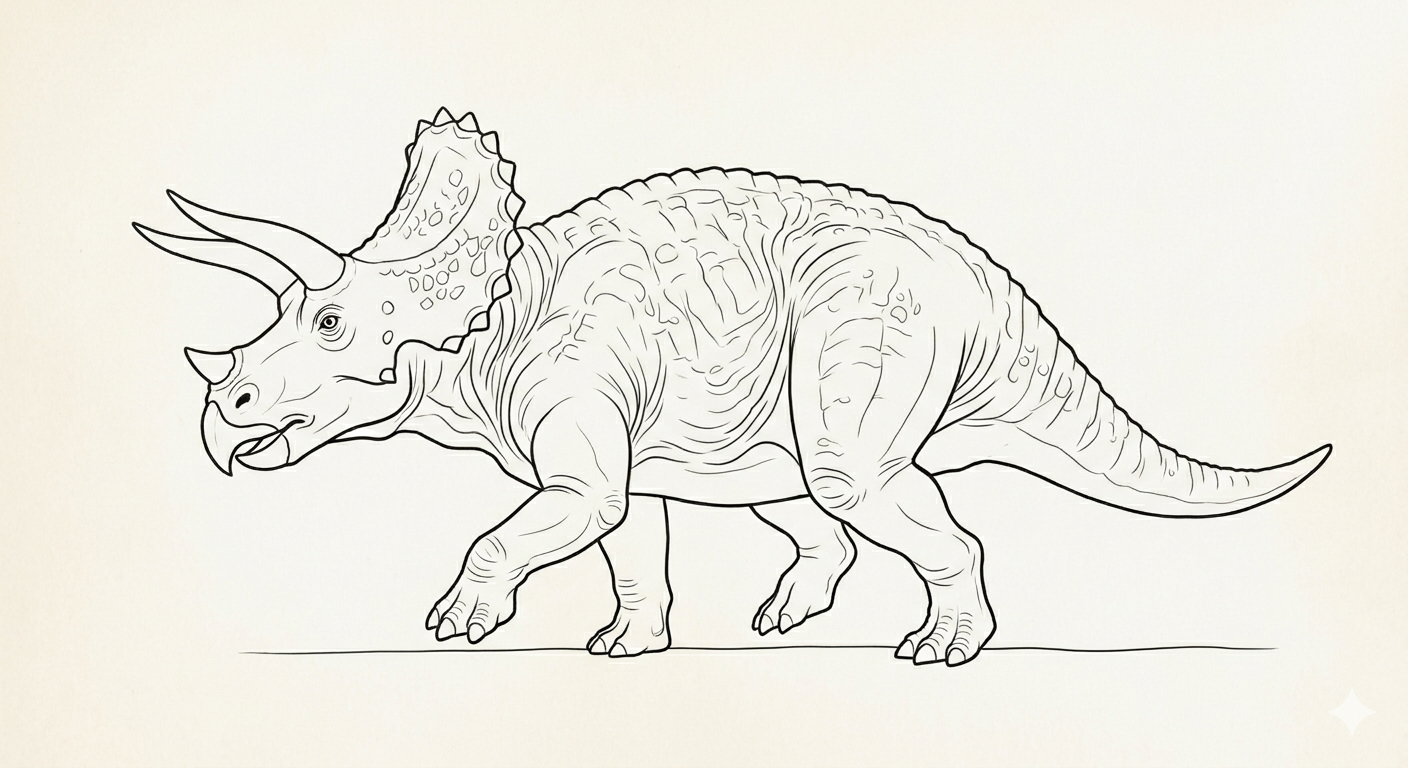
Gemini Generated Image
Using morphology can help you learn about dinosaurs and build your vocabulary. Dino comes from a word that means “terrible” and saur from a word that means “lizard,” so a dinosaur is a terrible lizard. There are more than 1000 species of dinosaurs. Because of ongoing explorations and chance discoveries, more are still being discovered. Dinosaurs formed diverse groups. They came in different sizes and had different ways of obtaining food and defending themselves and lived in diverse habitats. However, we can tell a lot about dinosaurs just by their names. Take the name triceratops. Tri means “three.” Cera is formed from a word that means “horn,” and ops is formed from a word that means “face.” Put together triceratops means “three horns on the face.” This is a good description of triceratops, except that two horns are on its head or skull and one is on its nose. Using the Dinosaur Morphemes Chart, answer the question that follow it. You will also be using these morphemes from Lesson 8 plus mono:
micro- very small, one millionth A microscope makes small things look bigger.
mega- great, very large Tyrannosaurus rex was a mega dinosaur.
poly- many A polysyllabic word may have five or more syllables.
mono- one Monorail trains run on a single rail.
Dinosaur Morpheme Chart
| Morpheme | Meaning | Example |
| dino | terrible | dinosaur |
| saur | lizard | dinosaur |
| cera | horn | triceratops |
| ops | face | triceratops |
| don(t) | tooth | orthodontist |
| pachy | thick | pachyderm (Derm means “skin:” an animal with thick skin, such as an elephant, is a pachyderm.) |
| raptor | robber, thief | raptor (bird of prey) |
| velo, veloci | fast, speedy, swift | velocity (rate of speed) |
1. Judging by its name, which raptor do you think was the fastest?
a. velociraptor b. microraptor c. vectiraptor
2. Which of the following dinoaurs had many teeth?
a.echinodon b. polyodontosaurus c. iguanadon
3. Which of the following dinosaurs had a small horn?
a. ischioceratops b. helioceratops c. microceratus
4. Which of the following dinosaurs was very small?
a. micropachycephalosaurus b. gigantosaurus c. magnosaurus
5.Which of these dinosaurs was one of the longest ever discovered?
a .supersaurus b. microhadrosaurus c. monolophosaurus
Challenge
1.The dinosaur with the longest name is micropachycephalosaurus. Do a word sum of this long name.
______________________________________________
2. If ortho means “straight,” what do you think an orthodontist does?
a. straightens teeth b. puts broken bones in a cast c. studies dinosaurs
Answers
Dinosaur Words
- a. velociraptor
- b. polyodontosaurus
- c. microceratus
- a. micropachycephalosaurus
- a. supersaurus
Challenge
micro+ pachy +cephalo +saurus or micro+pachy+cephal+o+saurus
The vowels o, e, i, u, and a are sometimes used to connect morphemes. However, determining whether a vowel is part of a morpheme or is a connecting letter can be difficult and technical. For instance, the o in micro in micropachycephalosaurus is part of the morpheme. The o after poly and the o after cephal in polyodontosaurus are connecting vowel letters. For the sake of simplicity, I don’t usually identify connecting letters. But you may want to. Therefore, I would count both of the above word sums as being correct. For a thorough discussion of creating word sums, refer to Barnett, L. Y., & Squires, K. (2005). Vocabulary & morphology using structured word inquiry. Pintail, CT: Empower Learning Center.
- a. straightens teeth
Note: All Morpheme Monday Lessons are posted at Buildingliteracy.org under The Building Literacy Blog.
©Thomas Gunning, Ed. D.
Monday Morpheme Lessons
Buldingliteracy.org
Contact email: Tom@buildingliteracy.org